Labrador Retriever Essentials
Pack like a Pro: Essentials for Your Labrador's Suitcase
A breeder who delivers puppies by road on car safety, the Florida heat rule, flying, hotels, and the pack list that keeps a trip smooth.
Home › Labrador Retriever Essentials › Traveling With Labradors
From Tishauna Borosky, MBA, and Dr. Paul Borosky, DBA, MBA, in our Sanford, FL home.
The short version
- We drive. We do not fly our dogs. On the road we feel we can keep them safer.
- For any real trip, crate or harness. A loose dog is a danger to itself and to you.
- Never leave a Lab in a parked car. It turns deadly fast, even on a mild day.
- Pack for the messes: paper towels, cleaning supplies, towels, and water.
- We deliver puppies by road within a 5-hour drive of Sanford, so we live this.
We do a lot of traveling with Labradors, and not the postcard kind.
We deliver our puppies by road, so we have logged real miles with dogs in the vehicle, and we have learned what works and what makes a mess. One rule sits above all the others for us: we drive, we do not fly them. On the road we can stop when they need to, keep an eye on them, and control the temperature, and that feels a lot safer than handing a dog to an airline. Whether you are taking your Lab on a weekend trip or bringing a new puppy home, here is how we do it. You can read more about our family and program any time.
In a crash, an unrestrained dog can be thrown through a window or crushed by an airbag, and even on a normal drive a pet in the footwell or across your lap can keep you from braking or seeing the road. The AVMA says the safe way to travel is a secured crate or a crash-tested harness.
Source: American Veterinary Medical Association, "Pet Safety in Vehicles."
Pack Like a Pro
Half of a smooth trip is what you put in the vehicle before you leave. Labs are big, they shed, and travel can upset a stomach, so we pack for the messes as much as the comforts. Here is our list.
The Borosky travel pack
A dog first-aid kit is one of those things you hope to never open. We keep one in the vehicle, and we walk through what goes in it and how to use it in our guide to Labrador first aid.
Traveling With Labradors by Car
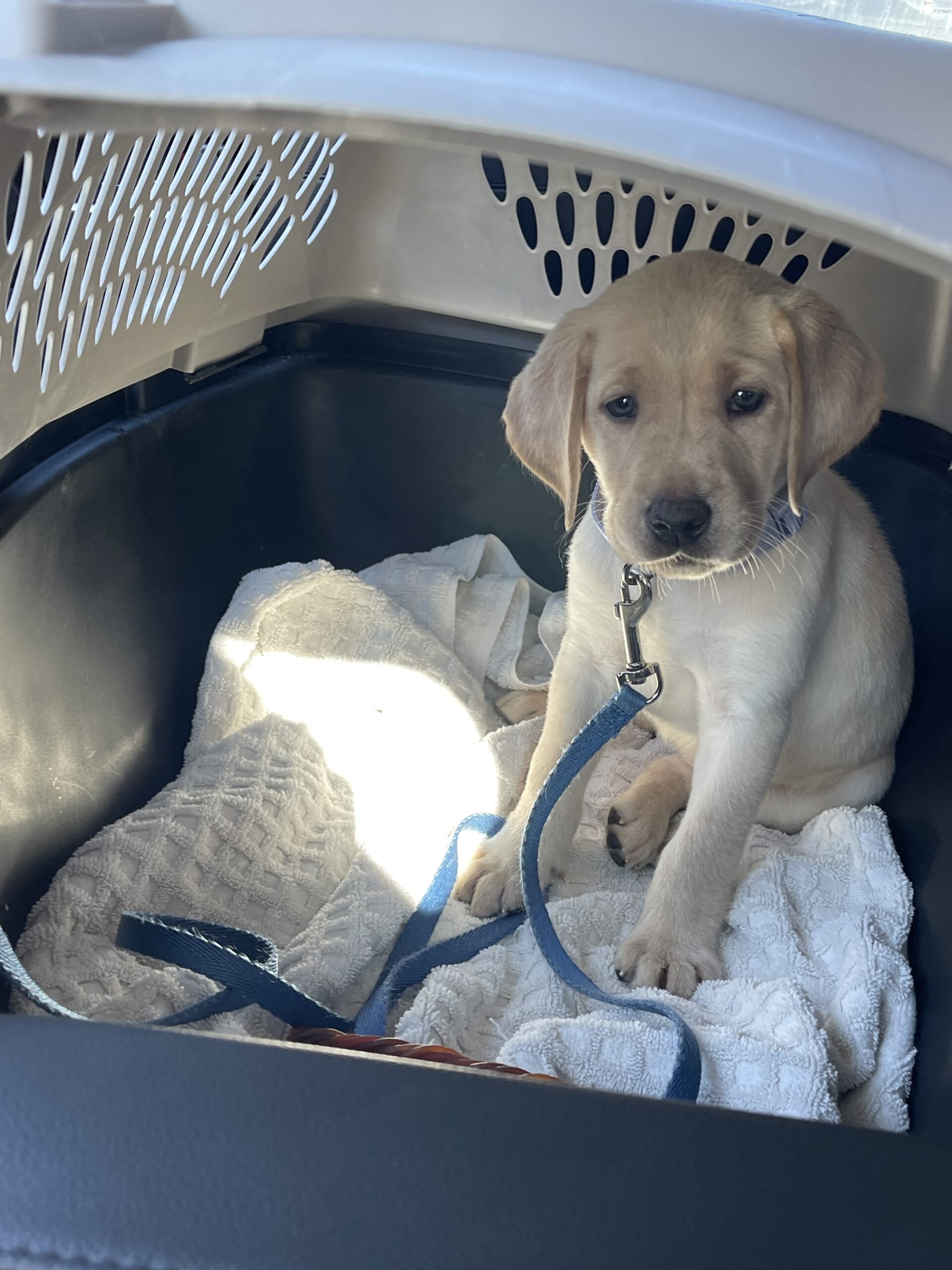
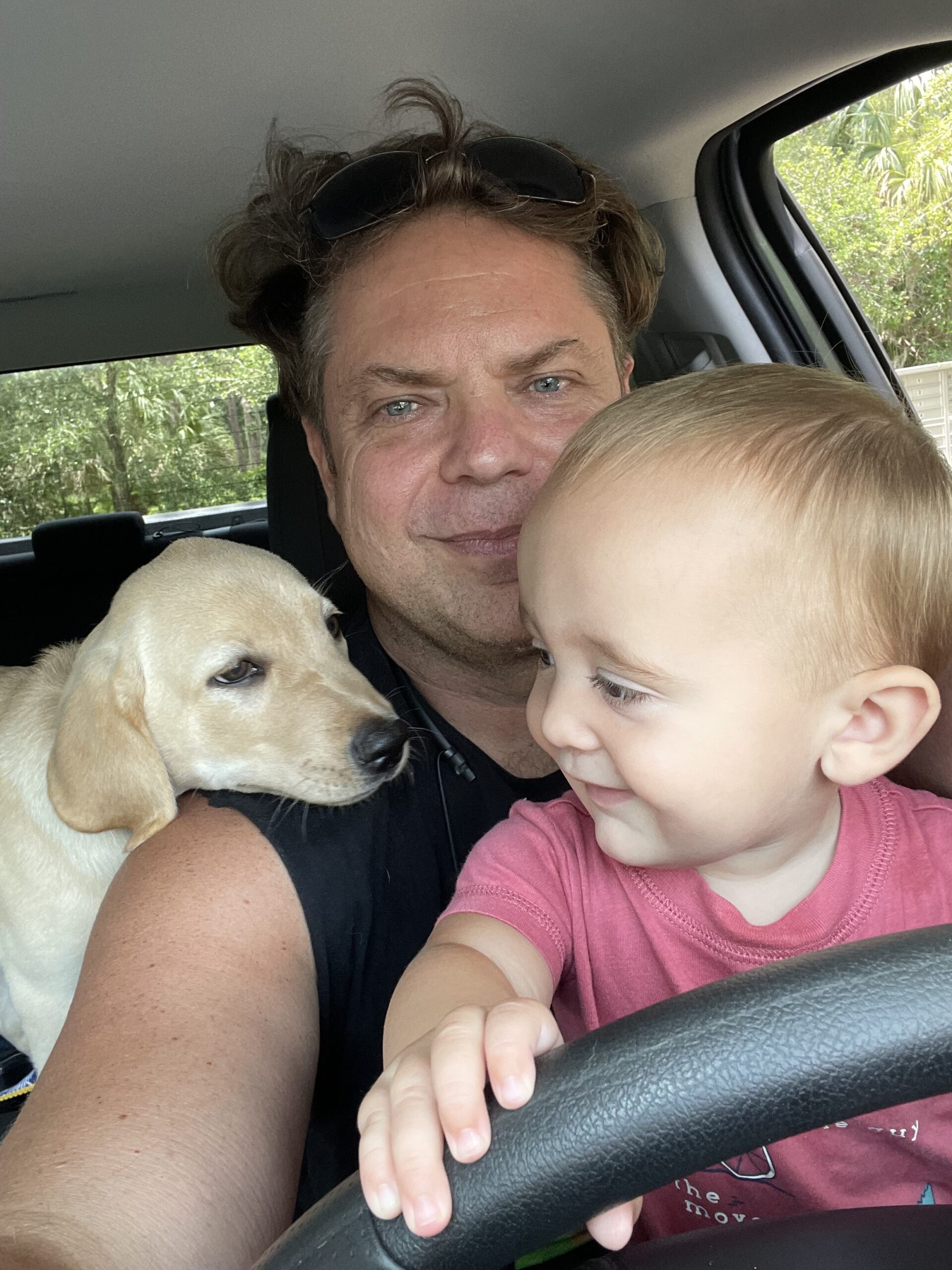
This is where we live, so this is the section that matters most. How we ride depends on the dog and the distance. For a short local hop, a puppy rides carried or down on the floorboard where it is snug and cannot tumble. For a delivery, that puppy goes in a small travel carrier. For our larger dogs on a longer trip, we use a crate, or settle them in the back seat. For any real distance, the crate is the safer call, and it is what the vets recommend.
Whatever the setup, we stop every two hours. The dogs get out on a leash, stretch, drink, and do their business, and so does the driver. Keep the cabin cool and well ventilated, because Labs overheat fast, and crack a window for fresh air without giving them room to hang out of it. A chew or a familiar blanket settles a nervous traveler. Plan your route with dog-friendly stops so the breaks are easy.
Never Leave Your Lab in a Parked Car
This is the one that is not negotiable, and in Florida it is a year-round danger, not just a July one.
The inside of a vehicle climbs about 20 degrees in 10 minutes and 30 degrees in 20, and within an hour it can be more than 40 degrees hotter than outside. On an 85 degree day that is well over 100 degrees inside, fast. Cracking the windows does not help. Never leave a dog in a parked car, not even for a few minutes.
Source: American Veterinary Medical Association, "Pet Safety in Vehicles."
If you have to stop somewhere your dog cannot go, that is a job for two people, or a different stop. The signs of heatstroke are heavy panting, drooling, weakness, confusion, vomiting, and dry or discolored gums. It is an emergency. Get the dog cool and to a vet right away.
If You Fly, Do It Carefully
We do not fly our dogs, but if you must, go in with your eyes open. Every airline has its own pet rules, and they change, so check before you book.
Crossing state lines by air generally requires a certificate of veterinary inspection, a health certificate signed by your vet, usually within 10 days of travel, with rabies and other vaccines up to date. Airlines set their own rules on crate size, breed, weight, and weather. Federal rules also require a dog to be at least 8 weeks old and weaned before flying.
Source: American Veterinary Medical Association, "Traveling With Your Dog or Cat."
If you do fly, get your Lab comfortable in the crate well ahead of time, with treats and short sessions at home, so the carrier feels safe instead of scary. Talk to your vet about whether your individual dog is a good candidate for air travel at all.
Hotels and Where You Stay
Not every hotel welcomes a 70-pound Lab, so book a pet-friendly spot ahead of time and read the fine print. Ask about pet fees, deposits, and any size or breed limits, and ask what is nearby for walks. Once you are in the room, set up a small area with their bed, bowls, and the towels, so they have their own spot and you contain the mess. Be considerate of other guests, a barking dog in a thin-walled hotel makes you no friends. A tired dog is a quiet dog, so walk them well before you settle in for the night.
New Places, New Sniffs
A new place is a treasure hunt of smells for a Lab, which is part of the fun and part of the risk. Keep them leashed in unfamiliar territory, carry water on every outing, and watch for wildlife, hot pavement, and plants you do not recognize. Look up a local vet or emergency clinic before you need one, and keep the number in your phone. Introduce new places slowly and let your dog set the pace. A confident dog travels well, and that confidence is built the same way you build it at home, which is exactly what our guide to exercise and the outdoors is about.
Bringing a Borosky Puppy Home
Most of our own miles are spent bringing puppies to their new families. We deliver within a 5-hour drive of Sanford, for an added charge, using a small travel carrier and the same two-hour break routine, so your puppy arrives calm and cared for. The crate skills that make travel easy start in week one, and our puppy care guide covers how we get them ready. If a road trip to come meet a litter is more your speed, you are always welcome to visit us in Sanford.
Common Questions About Traveling With Labradors
What is the safest way for a Labrador to ride in the car?
Can I leave my Lab in the car for a quick errand?
Should I fly with my Labrador or drive?
Do you deliver puppies?
Want a Borosky Puppy of Your Own?
We raise AKC Labradors in our home, English and American lines, and we will bring yours to you within a 5-hour drive of Sanford. See what is coming next, meet the dogs behind our program, or learn about our English white Labradors.
This guide is general breed information and is not veterinary advice. For health certificates, fitness to fly, or any medical concern, consult your veterinarian. If you suspect heatstroke, treat it as an emergency.