Labrador Retriever Essentials
Exercise Needs: Keeping Your Labrador Active and Healthy
How much exercise a Lab really needs, the activities that tire out body and brain, and how we keep ours moving in the Florida heat.
Home › Labrador Retriever Essentials › Exercise Needs
From Tishauna Borosky, MBA, and Dr. Paul Borosky, DBA, MBA, in our Sanford, FL home.
The short version
- A healthy adult Lab needs real daily exercise, not just a bathroom trip out back.
- Puppies get less, on a sliding scale, to protect growing joints.
- Skip it and your Lab gains weight fast. Our Emmie hit 100 pounds before we caught it.
- Walks, fetch, the yard, and the water all count. So does working the brain.
- In Florida, heat is the real danger. Exercise early, exercise late, and watch for heatstroke.
People fall for the Labrador face. Friendly, goofy, always happy to see you. What they do not always plan for is the engine behind it.
This breed was built to work all day, and that energy does not disappear because you live in a house with a couch. It has to go somewhere. Get the Labrador exercise needs right and you get a calm, happy dog by evening. Get them wrong and the dog finds his own entertainment, usually with your shoes. We raise Labs in our home in Sanford, English and American both, so most of what follows comes from living with six of them, not from a chart. You can read more about our family and program if you want the backstory.
The AKC puts Labradors among the breeds that need daily exercise to stay balanced. Labs that do not get it, including at least one long brisk walk, tend to turn destructive: chewing, digging, escaping the yard. They were made to run, swim, and work.
Source: American Kennel Club
How Much Does a Labrador Actually Need?
Here is the honest answer: more than most people think, and it changes with age. A healthy adult Lab does well on roughly an hour to two hours of real activity a day. Not all at once, and not all hard. A brisk morning walk, a game of fetch, some yard time, and an evening stroll add up fast. The point is that it is purposeful. A slow shuffle to the mailbox does not count.
Puppies are the exception, and it matters. Young Labs are still building their joints, and too much hard exercise too early can do real damage that shows up years later. The rule we follow, and the one most breeders and vets point to, is simple.
The Kennel Club's guideline for a growing puppy is about five minutes of formal exercise per month of age, up to twice daily, until the dog is fully grown. So a three-month-old gets around 15 minutes, twice a day. Skip the jumping, the long runs, and the sharp ball-chasing turns until the joints close, and never exercise on a full stomach.
Source: The Kennel Club
That five-minute number is for structured walks. It does not mean a puppy has to sit still the rest of the day. Free play in a safe, fenced space, at their own pace, is exactly what they should be doing. Which brings us to the real key with puppies: let them have fun. Let them sniff, romp, flop, and explore. And use that outside time to let them do their business too, so the exercise and the potty routine grow up together.
| Life stage | Structured exercise | Keep in mind |
|---|---|---|
| Puppy, 8 to 12 weeks | Short free play, plus 5 min per month of age on a leash | No jumping or hard impact. Let them set the pace. |
| Puppy, 3 to 6 months | About 15 to 30 min structured, twice a day | Build the routine. Still protect the joints. |
| Adult, 1 to 7 years | 60 to 120 min a day, mixed | Walks, fetch, swimming, and brain work. |
| Senior, 8 years and up | Keep them moving, lower impact | Shorter, gentler sessions. Swimming is ideal. |
Skip It, and Your Lab Pays for It
This is the part I want every buyer to hear, because it is the most common mistake we see. A Lab that does not get enough exercise gains weight. Fast. And our English dogs are especially good at it. Their calm, easygoing nature is a big reason families love them, but that same low-key temperament means they will happily lie around and balloon if you let them.
We learned it firsthand with Emmie, one of our white English girls. She is mellow, sweet, and never asks for much. That is exactly the problem. She put on weight quietly, and before we caught it she had climbed to 100 pounds. We put her on a strict diet and a lot more exercise, and she came back down. Lesson learned. With an easygoing Lab, you set the routine. The dog will not demand it.
Why does it matter so much? Because weight is the single most controllable thing you manage for your dog's whole life, and the research is not subtle.
A 14-year study followed 48 Labrador Retrievers from puppyhood. The dogs kept lean lived a median of 1.8 years longer than their well-fed littermates, 13 years versus 11.2, and went years longer before needing treatment for chronic problems like arthritis. Same dogs, same genes. The difference was weight.
Source: Kealy et al., Journal of the American Veterinary Medical Association (2002); Purina Life Span Study.
Keeping your Lab lean takes pressure off the hips and elbows, the joints this breed is already prone to trouble with. Exercise and diet are two halves of the same job. We cover the food side in detail in our guide to what to feed your Labrador, and the joint side in common Labrador health issues.
How We Burn It Off
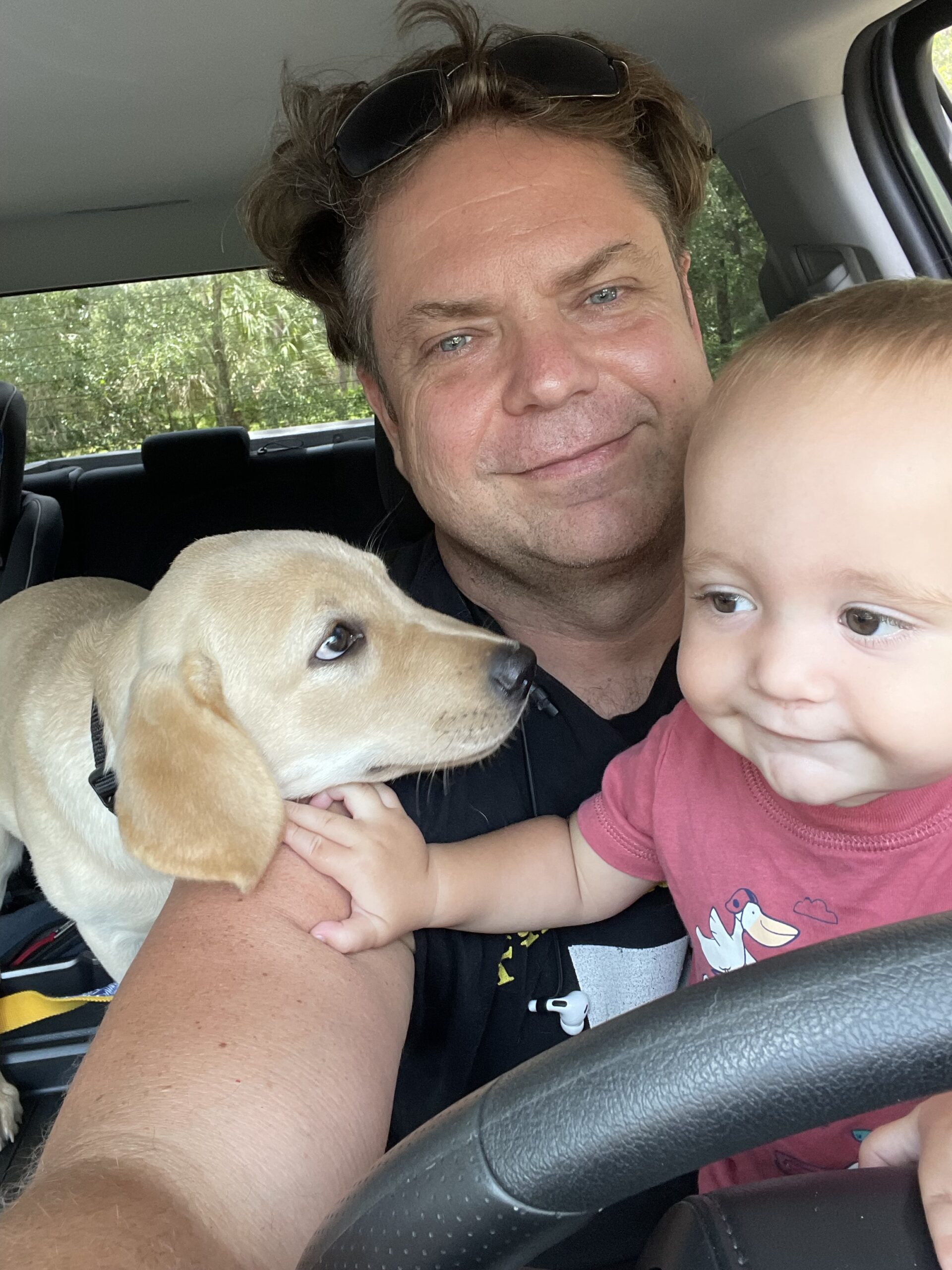
You do not need fancy equipment. You need a routine and a little space. Here is what ours looks like.
Dunkin and Louie get walked twice a day, morning and evening. We are lucky to have a small pond with a walking trail right by the house, so the walk does double duty: exercise plus new smells, which tires the brain as much as the legs. Beyond the walks, we have a third-acre lot, fully fenced, where the dogs can run off leash, chase each other, and just be Labs. A fenced yard is one of the best investments you can make for this breed.
Then there is fetch, which for a retriever is less a game than a calling. It burns energy fast and doubles as a manners lesson if you make them sit and wait before the throw, and hand the ball back cleanly.
Work the Brain, Not Just the Legs
A tired body is only half the job. Labs are smart, and a smart dog that is bored gets into trouble even if his legs are tired. Mental work counts as exercise, and it is the part most owners skip. Hide treats around the yard and let that nose go to work. Use a puzzle feeder instead of a bowl. Run five minutes of training reps, sit, stay, come, before a meal. A short session of brain work can settle a dog as well as a long walk. If you are starting from scratch, our training basics guide is the place to begin.
Exercising in the Florida Heat
Living where we do, this is the section that actually saves dogs. A Labrador's thick double coat and all-in attitude are a bad mix with a Florida afternoon. They will run themselves into trouble because they do not know to stop. So the routine here is built around the heat: hard exercise in the early morning and after the sun drops, easy in the middle of the day, and always with water and shade close by.
The AVMA warns against walking, running, or hiking with a dog during the hottest parts of the day. Dogs cool mainly by panting, which is far less efficient than sweating, and overweight dogs are at higher risk. Signs of heatstroke include heavy panting, drooling, weakness or confusion, vomiting, and dry or discolored gums. It is an emergency.
If you see those signs, get your dog into shade and cool water and call your vet right away. And before you start any new exercise routine, especially with a senior, an overweight, or a recovering dog, check with your vet about what is safe. We are breeders, not veterinarians, and the heat is one place where a quick phone call beats a guess.
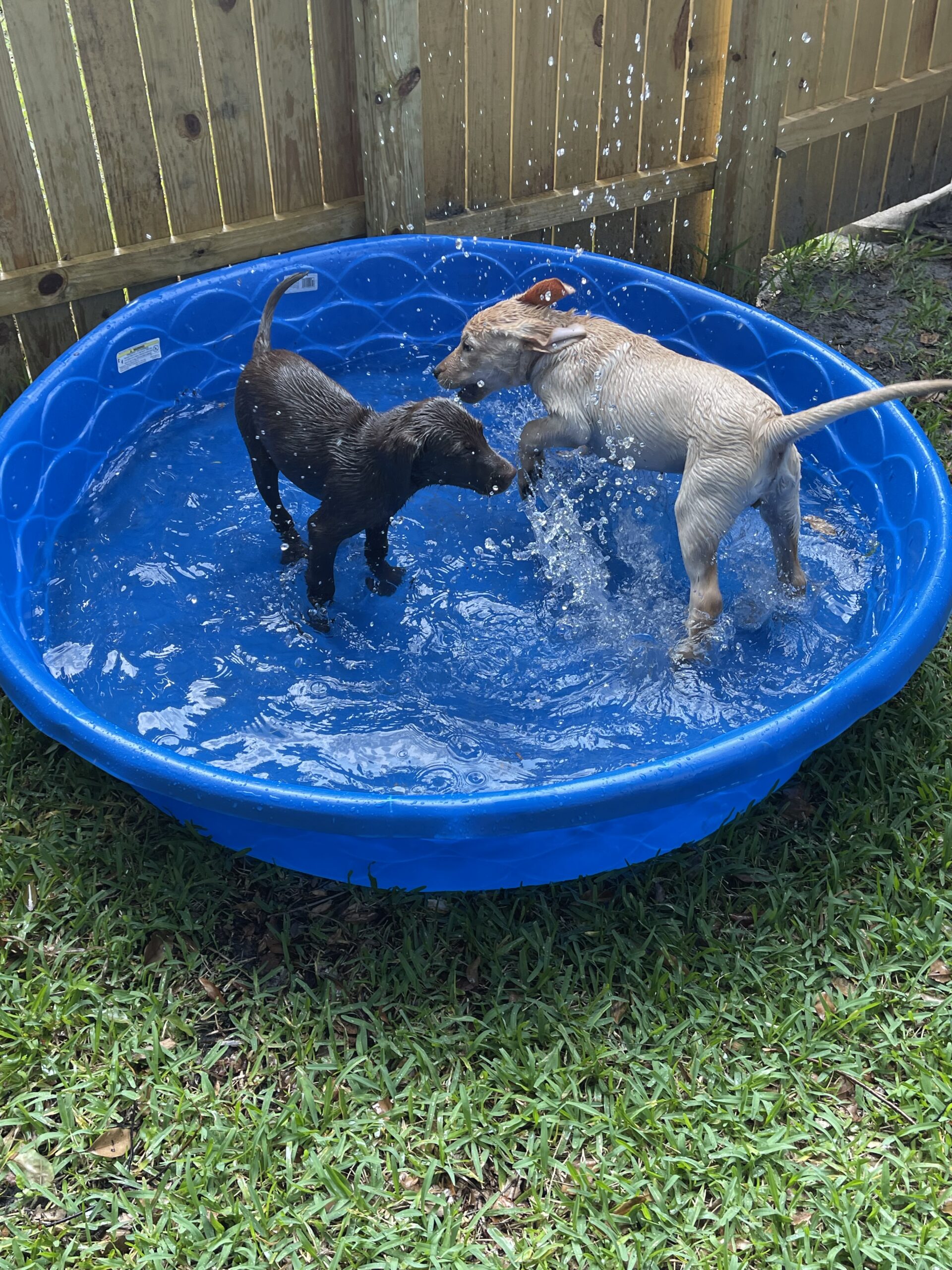
The flip side of Florida heat is Florida water, and Labs were born for it. Swimming is the best low-impact workout going. It burns serious energy, spares the joints, and most Labs take to it like they have done it forever. Supervise around open water, and a life vest is a smart call on boats or in deep water.
Reading Your Own Dog
Every Lab is a little different, and the right amount of exercise is the amount that leaves your dog content. Watch for the signals. Too little, and you see the classic tells: chewing, digging, pacing, the zoomies at 9 p.m., weight creeping on. Too much, and you see the opposite: limping, stiffness, lagging behind on the walk, or sleeping harder than usual the next day. Puppies and seniors especially can be pushed too far. Adjust to the dog in front of you, not the number in a guide.
A realistic week with a Lab
Common Questions About Labrador Exercise
How much exercise does an adult Labrador need each day?
How much exercise is too much for a Labrador puppy?
My Lab is gaining weight. Is it diet or exercise?
Can my Labrador exercise in the Florida summer?
Thinking About a Lab of Your Own?
Energy level is a big part of picking the right Lab. Our English dogs lean calm, our American lines lean high-drive, and meeting them is the best way to know which fits your life. See the dogs behind our program, look at what is coming, or learn what sets our English white Labradors apart.
This guide is general breed information and is not veterinary advice. Exercise needs vary by dog. For a senior, overweight, injured, or recovering Lab, confirm a safe routine with your veterinarian.
References
- American Kennel Club. "Is the Labrador Retriever the Right Dog Breed for You?" akc.org
- The Kennel Club. "Puppy and dog walking tips." thekennelclub.org.uk
- Kealy RD, Lawler DF, Ballam JM, et al. "Effects of diet restriction on life span and age-related changes in dogs." Journal of the American Veterinary Medical Association, 2002;220(9):1315-1320. PubMed 11991408
- American Veterinary Medical Association. "Warm weather pet safety." avma.org