Home › Training Basics
Labrador Training Basics: How to Train Your Lab Puppy
Written from our own home in Sanford, FL, where we raise and train every one of our Labradors.

Training a Labrador is less about drills and more about building a relationship. Labs are smart, eager to please, and food-motivated, which makes them a joy to teach. They are also energetic and easily distracted, which means the how matters as much as the what. This is the same approach we use with our own dogs and every puppy we raise: keep it short, keep it positive, and keep it consistent.
Quick Takeaways
- Use positive reinforcement, treats, praise, and play, not punishment.
- Keep sessions short and frequent: a few minutes, a few times a day.
- Start socializing early, the first three months are the most important window.
- Master the core three first: sit, stay, come.
- Channel their retriever instinct with fetch and brain games.
Start With Short, Positive Sessions
The fastest way to teach a Lab is to reward what you want and ignore what you don't. Mark the moment your puppy gets it right, a cheerful "Yes!" or "Good dog!", and follow it with a small treat or a scratch behind the ears. Labs light up for that kind of feedback, and the science backs it up.
Keep each session short. Puppies have a five-minute attention span on a good day, so two or three quick rounds spread through the day beat one long, frustrating session. End while your puppy is still winning, and they will come back excited next time.
Want to see it in action? In the clip here, Dr. Paul works with Louie Waffles on a relaxed "up and down" refresher. Notice how short, calm, and upbeat it stays, that is exactly how you build confidence in a young Lab.
Socialize Early: The First Three Months Matter Most
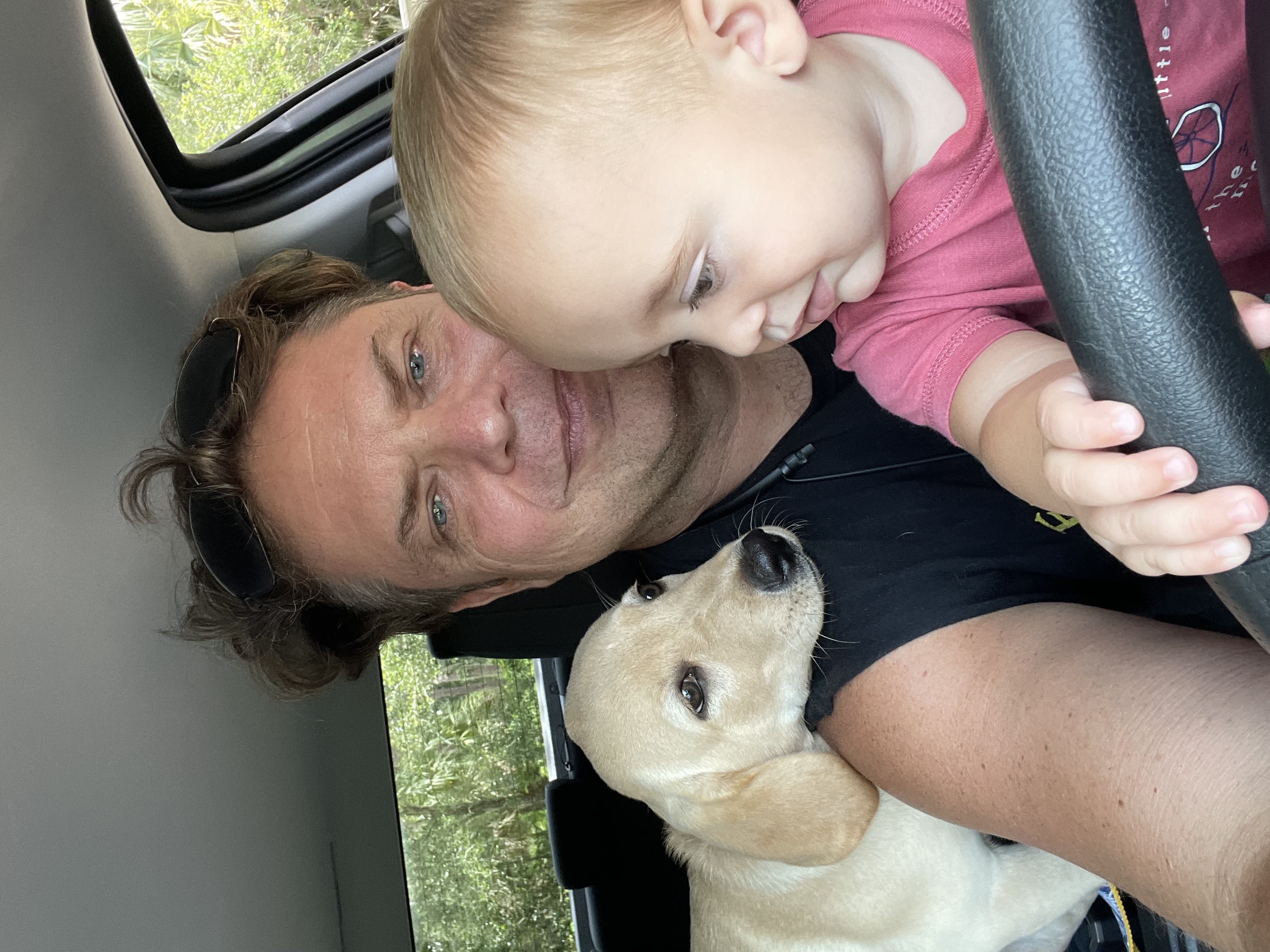
Good manners start with confidence, and confidence is built by safely exposing your puppy to the world, new people, sounds, surfaces, and friendly dogs, while they are still young. We start this at our home long before a puppy ever goes to you, and you should keep it going.
That window closes fast, so make it count. Keep every new experience calm and rewarding, and never force a frightened puppy, let them explore at their own pace. For a deeper walk-through, see our guide on socializing your Labrador puppy.
Master the Core Three: Sit, Stay, Come
Before any fancy tricks, nail the commands that keep your dog safe and polite. Work them one at a time, in a quiet room first, then add distractions as your puppy succeeds.
- Sit. Hold a treat just above the nose and move it back over the head. As the nose follows and the bottom drops, say "sit" and reward.
- Stay. Ask for a sit, hold up a flat hand, take one step back, then return and reward. Add distance and time slowly.
- Come. Say "come" in a happy voice, crouch down, and reward big every single time, this one can save your dog's life, so make it the best word they know.
Once those are solid, layer in "down," "leave it," and a calm "place." Variety keeps a clever Lab interested.
Put Their Retriever Brain to Work
Labs were bred to work, and a bored Lab finds its own (usually chewy) entertainment. Fetch is the perfect outlet: start with a tennis ball, encourage the bring-back, reward the drop, and repeat. As your puppy gets it, swap in different objects, frisbees, soft toys, even a rolled-up newspaper.
Retrieving games burn energy and sharpen the mind at the same time, which is half the battle with a young Lab. For how much exercise your dog actually needs by age, see our guide to a Labrador's exercise needs.

Good Manners at Home: Jumping and Barking
Training is not just tricks, it is living politely with people. Two issues come up most with young Labs:
Jumping on guests. Teach an alternative the dog can't do while jumping, like sitting to say hello. Reward calm four-on-the-floor greetings and simply ignore the jumping (no eye contact, no push, which reads as play). Be boringly consistent and it fades.
Barking. Figure out the trigger first. Most nuisance barking is boredom or alarm. Redirect with a command or a toy, reward the quiet, and make sure your dog is getting enough exercise, a tired Lab is a quiet Lab.
Why Labradors Make Such Willing Students
If training feels easier than you expected, it is not your imagination. The Lab's combination of intelligence, biddability, and love of food is exactly what made the breed America's favorite for decades.
Frequently Asked Questions
At what age should I start training my Labrador puppy?
You can start gentle training and socialization the day your puppy comes home, usually around 8 weeks. The period from about 3 to 14 weeks is the most important window for positive social experiences, so the earlier you start, the better.
How long should Labrador training sessions be?
Keep them short. Puppies have roughly a five-minute attention span, so two or three brief sessions spread through the day work far better than one long one. End while your puppy is still succeeding.
What is the best training method for Labradors?
Positive reinforcement, rewarding the behavior you want with treats, praise, and play. Research shows reward-based training is at least as effective as punishment-based methods and is better for a dog's welfare and its relationship with you.
Are Labrador Retrievers easy to train?
Yes. Labs are intelligent, eager to please, and food-motivated, which makes them one of the easier breeds to train. Their main challenge is energy and distraction, which short, fun, consistent sessions solve.
Final Thoughts
Training your Labrador is an adventure built on patience, consistency, and a whole lot of treats. Keep sessions short and upbeat, start socializing early, and reward the behavior you want to see again. Do that, and you will not just have an obedient dog, you will have a teammate. Enjoy every minute of it, your Lab certainly will.
Sources & References
- Vieira de Castro, A.C., et al. "Does training method matter? Evidence for the negative impact of aversive-based methods on companion dog welfare." PLOS ONE, 2020. journals.plos.org
- American Veterinary Society of Animal Behavior. "Position Statement on Puppy Socialization." avsab.org
- American Kennel Club. "Labrador Retriever" (breed history). akc.org
- American Kennel Club. "French Bulldog Knocks Labrador Retriever Out of Number One Spot," 2023. akc.org
Related Articles
Looking for a Well-Started Labrador Puppy?
Our puppies begin their socialization and crate training with us before they ever come home. Meet our dogs Dunkin and Sadie Mae, see our upcoming litters, or get in touch to join the waitlist.
Call or text Dr. Paul at (321) 948-9588.
Originally published 12/23/2023 · Last Updated: 6/7/2026 · Reviewed by Dr. Paul Borosky, DBA, MBA