Labrador Retriever Essentials
Grooming 101: Maintaining Your Labrador's Coat and Hygiene
Brushing the double coat, baths done right, nails, ears, and teeth. The grooming routine we actually run on six Labs at home.
Home › Labrador Retriever Essentials › Grooming 101
From Tishauna Borosky, MBA, and Dr. Paul Borosky, DBA, MBA, in our Sanford, FL home.
The short version
- That short coat is a double coat, and it sheds. Year-round, with two big blowouts.
- Brushing is the workhorse. We brush multiple times a week and vacuum twice a day.
- Bathe rarely. We bathe ours twice a year, on purpose, to protect the skin's natural oils.
- Teeth daily, ears on a schedule, nails about twice a month.
- Never shave a Lab. You wreck the coat that keeps them cool.
Grooming a Lab is not about making the dog pretty for a photo. It is health care you do with a brush.
Done right, it heads off matting, hot spots, ear infections, dental disease, and the sore feet that come from overgrown nails. Done never, those problems find you. The good news is that Labrador grooming is simple once you know what each job is actually for, and a Lab's coat asks for less fuss than most people expect. We groom six of them in our home in Sanford, so the routine below is the one we actually run, not a wish list. You can read more about our family and program if you want the backstory.
A Labrador's coat is a double coat, and it sheds year-round with two heavy seasonal blowouts, usually spring and fall. Regular brushing pulls the dead hair before it lands on your floor and your clothes. And you never shave a double coat: it damages the coat, removes the layer that keeps a Lab cool, and exposes the skin to sunburn.
Source: American Kennel Club, "Dog Shedding" and "How to Groom a Labrador Retriever."
The Double Coat, and Why You Never Shave It
Here is the thing most new owners do not realize: that sleek, short Lab coat is two coats. A soft, dense undercoat for insulation, and a coarser, water-repellent topcoat over it. Together they keep your Lab warm in winter, cool in summer, and dry in the water. They also shed. A lot.
Because of how that coat works, you do not shave a Labrador. It is tempting in a Florida summer, but it backfires. Shaving a double coat damages the topcoat, lets the undercoat grow in unevenly, removes the air layer that actually keeps the dog cool, and exposes the skin to sunburn. The coat is doing its job. Leave it on and manage it with a brush instead.
Brushing: The One Habit That Does the Most
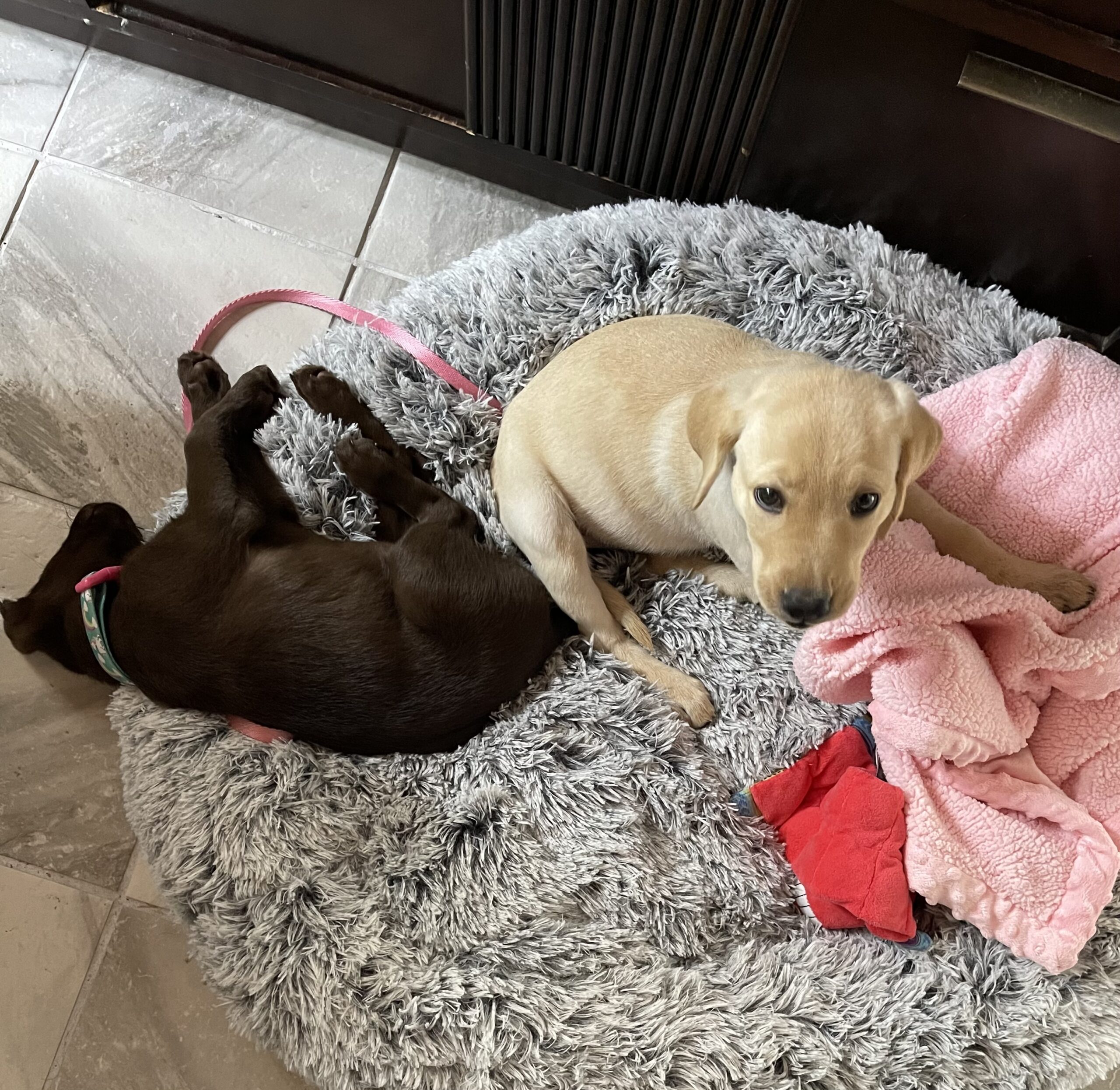
If you only do one thing, brush. We brush ours multiple times a week, and during a heavy shed we go closer to daily. A good brushing session pulls out the dead undercoat, spreads the skin's natural oils through the coat so it stays healthy and shiny, and gives you a few minutes of hands-on time with your dog that doubles as a once-over for lumps, ticks, or sore spots.
A word on the reality of it: our whites shed the most, and white hair has a talent for showing up on dark pants. So we vacuum the house twice a day. That is not a complaint, it is just the deal with a double-coated dog. One trick that helps more than you would think: give them a bed. Our dogs sleep in their own beds, and it keeps a surprising amount of hair off the floor and the furniture.
Bath Time: Less Often Than You Think
This one surprises people. We bathe our Labs twice a year. That is on purpose, and the reason is the skin.
Vets and the AKC recommend bathing most dogs as infrequently as their lifestyle allows. Washing too often removes the natural oils that keep skin healthy and the coat water-resistant, and it can leave a double-coated dog with dry, itchy, irritated skin. Brushing, not bathing, is what keeps the coat in shape day to day.
Source: American Kennel Club, "How Often Should You Bathe Your Dog" and "Dog Skincare."
When you do bathe, use a dog-specific shampoo, never a human one, keep the water lukewarm, and rinse until you are sure every trace of soap is gone. Leftover shampoo is a common cause of itching. Towel them off well, and on a cool day let them finish drying somewhere warm. Between baths, a dirty or muddy Lab usually just needs a brush and a damp cloth, not a full wash.
Skin and Belly Checks
While you are brushing, look at the skin, especially the belly where the fur is thin. We check our dogs' bellies regularly for rashes, redness, or any sign they are breaking out. Labs can be prone to allergies and skin irritation, and the belly is where you spot it first. Catch a hot spot or an allergic flare early and it is a quick fix. Miss it and it can turn into a raw, infected mess. If something does not clear up on its own in a day or two, or it looks angry, call your vet. Skin issues are easier to treat early.
Nails: Small Job, Real Consequences
Nails are the job people skip, and skipping it has a cost. Overgrown nails change how a dog stands and walks, and over time that stresses the joints. We trim ours as needed, which usually works out to about twice a month.
Use a dog nail clipper and take just the tips. The part to avoid is the quick, the pink, sensitive core inside the nail. On dark nails you cannot see it, so trim small amounts at a time. If you are not comfortable doing it, a vet or groomer will, and it is cheap. One bonus: regular walks on pavement file the nails down naturally, so an active Lab needs less trimming than a couch potato. Our guide to a Labrador's exercise needs covers that side of things.
Ears: Where Labs Get in Trouble
A Lab's floppy ears look sweet and trap trouble. They hang over the ear canal, hold in warmth and moisture, and after a swim or a bath that warm, damp space is exactly what yeast and bacteria want.
The AKC flags Labradors and other floppy-eared, water-loving breeds as more prone to ear infections, because moisture gets trapped in the canal. The fix is routine: clean the ears on a schedule, at least monthly, with a vet-approved cleaner, and dry them thoroughly after every swim or bath.
Source: American Kennel Club, "Dog Ear Infections" and "How to Help Prevent Dog Ear Infections."
Clean only what you can see and reach. Never push a cotton swab down into the canal. If you smell a strong odor, see dark gunk, or your Lab is shaking his head and scratching at an ear, that is a vet trip, not a cleaning.
Teeth: The Most-Skipped, Highest-Stakes Job
If brushing the coat is the habit that does the most for looks, brushing the teeth is the one that does the most for long-term health. We brush our dogs' teeth daily. It sounds like a lot until you see why.
The AVMA calls periodontal disease the most common dental condition in dogs, and says that by age three most pets show early signs of it. Left alone it causes pain and tooth loss, and it has been linked to changes in the heart, liver, and kidneys.
Source: American Veterinary Medical Association, "Pet Dental Care."
Use a dog toothpaste, never human toothpaste, which is not safe for them. Flavors like chicken or beef make it an easy sell. Introduce it slowly and keep it positive. Dental chews help between brushings, but they do not replace the brush. And your vet's cleanings are part of the picture, so ask about dental care at your regular visits. This is health stuff, so when in doubt, your vet is the call.
Grooming Through a Florida Year
Our climate changes the rhythm a little. In summer the shedding ramps up and the heat is real, so we brush more to pull dead fur and help them stay cool, and we keep cool water and shade close by. This is also the season people are most tempted to shave, and it is exactly when you should not. The coat is part of how they handle the heat.
Winters here are mild, but the same rules travel if you go north with your dog: dry air can dry out the skin, so do not over-bathe, and check the paws after cold walks for trapped ice or salt. A well-groomed Lab is a more comfortable Lab, in any season.
A Grooming Schedule You Can Keep
| Task | How often | Why it matters |
|---|---|---|
| Brush coat | Several times a week, daily in a shed | Pulls dead undercoat, spreads natural oils |
| Vacuum the house | As needed (we do twice a day) | Double coats shed, whites most of all |
| Brush teeth | Daily | Heads off the most common dental disease |
| Check ears | Weekly, clean monthly and after swims | Floppy ears trap moisture and infect |
| Trim nails | About twice a month | Overgrown nails stress the joints |
| Belly and skin check | Weekly, while brushing | Catches allergies and hot spots early |
| Bath | About twice a year, or when truly dirty | Protects the skin's natural oils |
Your weekly grooming pass
Common Questions About Labrador Grooming
How often should I brush my Labrador?
How often should I bathe my Lab?
Should I shave my Labrador in summer?
Why do my Lab's ears keep getting infected?
Thinking About a Lab of Your Own?
That coat is a big part of the appeal, and our white English Labradors wear it best. See what makes our English whites special, meet the dogs behind our program, or look at what is coming next.
This guide is general breed information and is not veterinary advice. For persistent skin, ear, or dental problems, or before starting any new care routine, talk with your veterinarian.
References
- American Kennel Club. "Dog Shedding: What to Expect And How to Manage It." akc.org
- American Kennel Club. "How to Groom a Labrador Retriever." akc.org
- American Kennel Club. "How Often Should You Bathe Your Dog?" akc.org
- American Kennel Club. "Dog Ear Infections: Symptoms, Causes, Treatment, and Prevention." akc.org
- American Veterinary Medical Association. "Pet Dental Care." avma.org