Home › Lab Essentials › What to Feed Your Labrador
What to Feed Your Labrador, From Puppy to Senior
A family breeder's plain guide to feeding a Lab well.
Family-raised by Tishauna Borosky, MBA, and Dr. Paul Borosky, DBA, MBA, in our Sanford, FL home.
The short version
- Feed for the life stage. Puppies, adults, and seniors need different things.
- Build meals around quality protein, with the right fats and carbs.
- Watch the portions. This breed gains weight fast.
- Treats and supplements help, in moderation.
- Some common foods are dangerous. Know the list and keep them out of reach.
Labradors love to eat. Any Lab owner already knows it. The trick is not feeding a Lab, it is feeding a Lab well, so what to feed your Labrador matters more for this breed than for most. Get it right and you get a lean, energetic dog who lives a long time. Get it wrong and you get a heavy dog with sore joints. Here is how we think about it, from the puppy weeks through the senior years.
What Your Lab Needs at Each Age

A puppy, an adult, and a senior Lab are three different feeding jobs. Puppies are growing fast and burning energy, so they need more calories and more protein and fat to build muscle and bone. Adults need a steady, balanced diet that holds a healthy weight. Seniors usually need fewer calories, plus support for aging joints and food that is easy to digest. The diet that is perfect at one stage is wrong at another, so adjust as your Lab grows.
| Life stage | What to prioritize | Feeding notes |
|---|---|---|
| Puppy | Growth | More calories, higher protein and fat, a quality puppy formula, smaller and more frequent meals |
| Adult | Maintenance | A balanced complete diet, measured portions, usually two meals a day |
| Senior | Comfort | Fewer calories, joint support, easy-to-digest food, and a close eye on the weight |
The Building Blocks: Protein, Fat, and Carbs
A good Lab diet comes down to three things in the right balance. Protein is the foundation. It builds and repairs muscle, and good protein from real meat and fish also feeds a healthy coat and skin. Fat is energy, and the right fats, the omega-3s and omega-6s, keep the coat shiny and support the brain. Carbohydrates, mostly from whole grains, give steady, all-day energy and the fiber that keeps digestion regular. Tip the balance too far in any direction and you notice it. Too few carbs and the dog runs low on fuel. Too many, in a less active Lab, and the weight creeps on.
Good Ingredients to Look For
When you read a label, you want real, named ingredients near the top. Quality protein like chicken, beef, or fish. Whole grains like brown rice or oats for fiber and steady energy. And some fruits and vegetables for vitamins and natural antioxidants. Carrots, blueberries, and apple slices make good additions and good training treats, and most Labs love the crunch. You do not need anything fancy or expensive. You need real food in the right amounts.
Watching the Weight
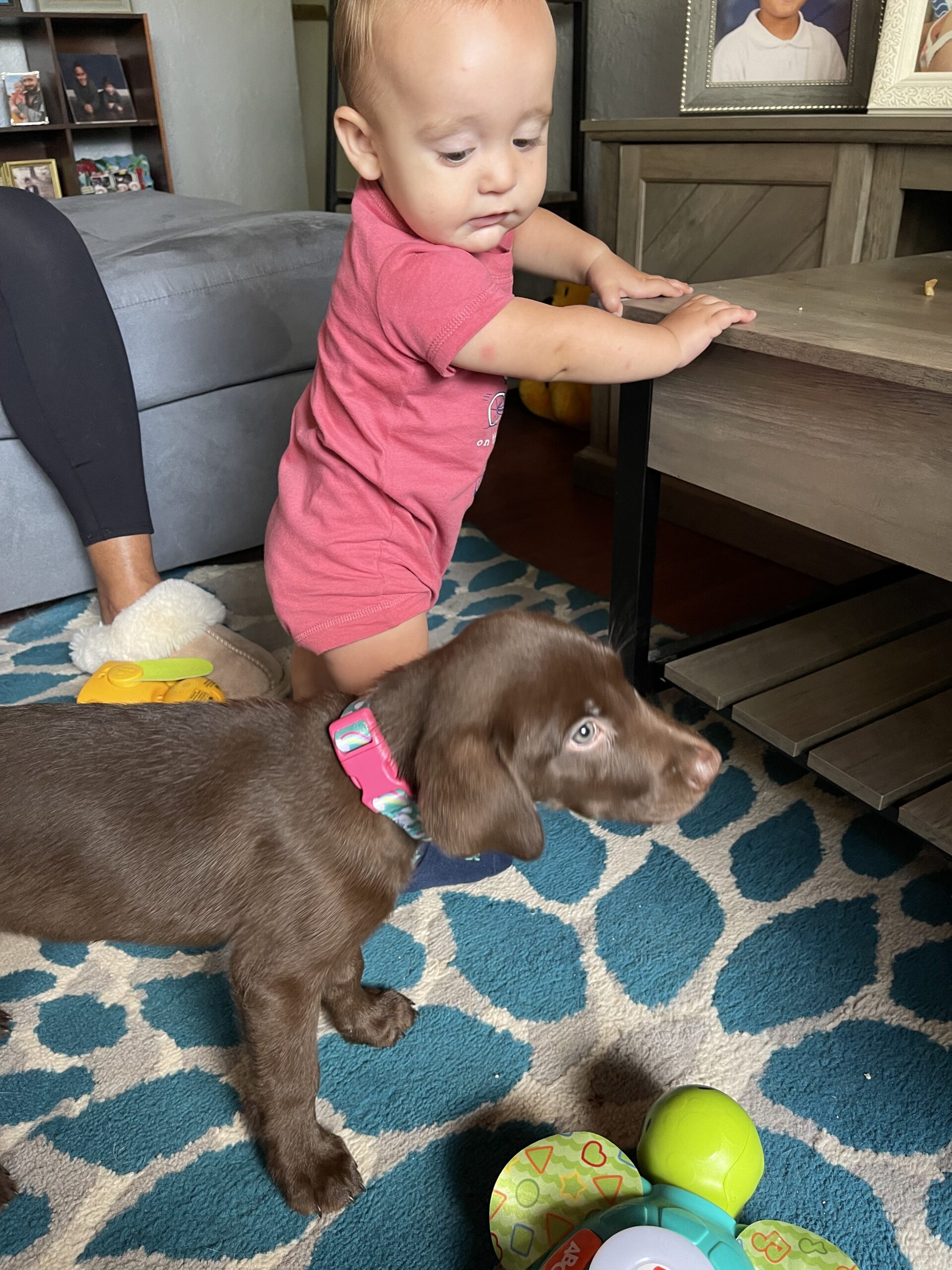
This is the section that matters most for a Lab. This breed is wired to overeat, and the weight comes on quietly. A pound or two does not look like much, but it adds up, and extra weight is hard on the hips and elbows Labs already tend to struggle with. The fix is not complicated. Measure the food instead of eyeballing it. Feed the dog in front of you, not the line on the bag. You should be able to feel the ribs without pressing, and see a waist from above. Keeping a Lab lean is the single best thing you can do for a long, comfortable life. One long-running Purina study found that dogs kept at a healthy weight lived about two years longer than their overweight littermates. For more on the joint side of this, see our guide to common Labrador health issues, and remember that food and exercise work together.
Roughly 59% of dogs in the United States are overweight or obese, and most of their owners do not realize it. For a food-driven breed like the Lab, portion control is not optional.
Treats and Supplements
Treats are fine. They are useful for training and good for the bond. Just keep them to around 10 percent of the daily calories and pick ones made from simple, real ingredients. Supplements can help when the diet needs a boost: fish oil for skin and coat, glucosamine for joints, which is handy for older Labs, and probiotics for digestion. None of it replaces good food. It just rounds it out. Talk to your vet before adding anything new.
Foods That Are Dangerous
Some everyday foods are seriously dangerous for a dog, not just upsetting to the stomach. Keep these out of reach, and never share them.
- Chocolate. Contains methylxanthines that can cause vomiting, abnormal heart rhythm, tremors, seizures, and worse. (ASPCA)
- Grapes and raisins. Can cause sudden kidney failure, even in small amounts. (ASPCA)
- Onions, garlic, and chives. Damage red blood cells and can lead to anemia, cooked or raw. (ASPCA)
- Xylitol. A sweetener in sugar-free gum, candy, and some peanut butters that can cause a dangerous blood-sugar drop and liver failure. (FDA)
- Cooked bones. Can splinter and cause choking or a blocked or torn digestive tract. (FDA)
- Fatty foods and rich scraps. Can trigger pancreatitis, which is painful and can be serious. (FDA)
How We Feed Our Labs
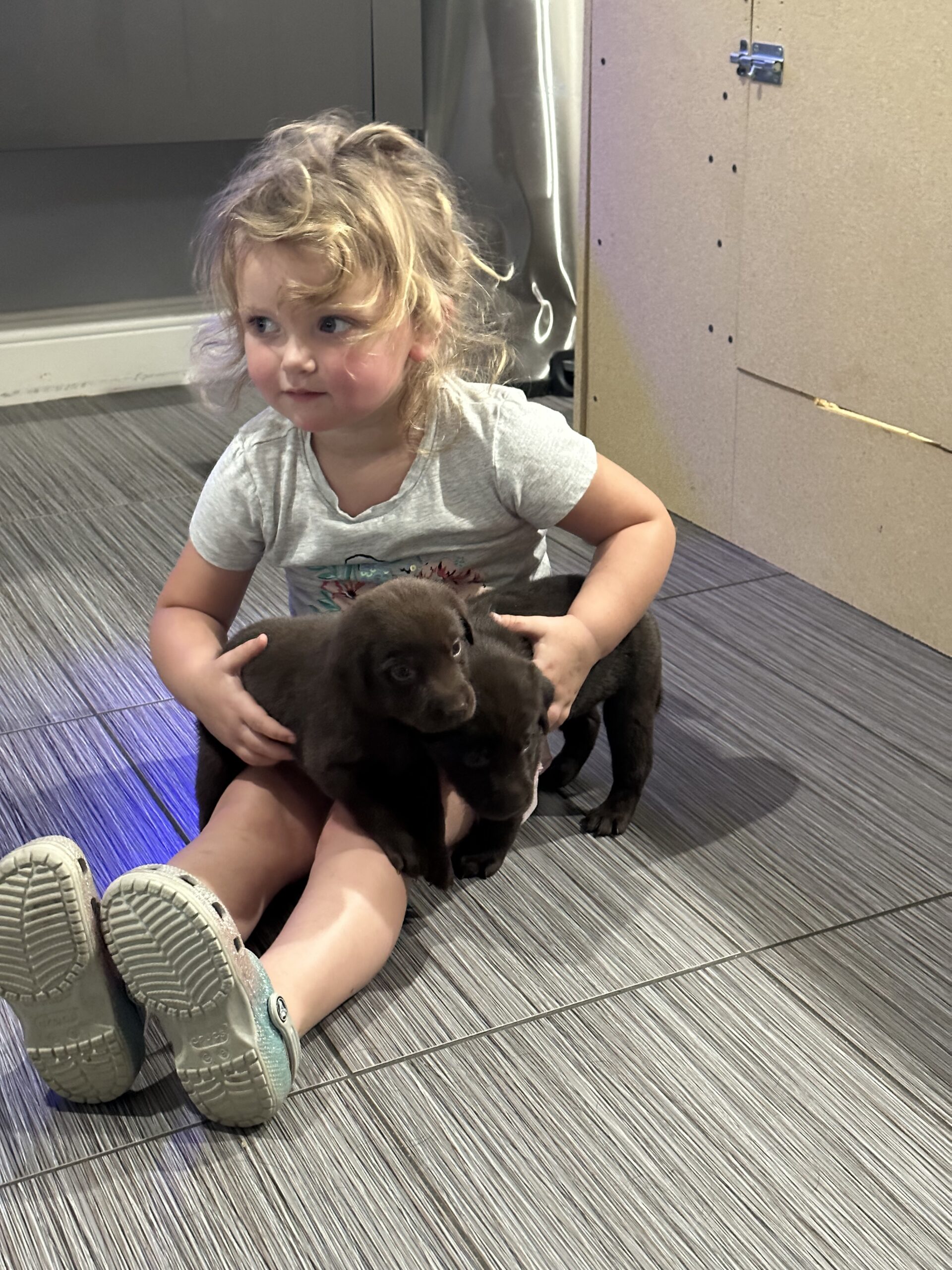
Here is what feeding looks like at our house. We feed on a set schedule, twice a day, with measured portions, and no bowls left down all day. Puppies start on a quality puppy food, and we send every puppy home with notes on exactly what they have been eating. Sudden food changes upset a young stomach, so if you want to switch foods, do it slowly over a week or so. None of this is complicated. It is just consistency, the right amounts, and paying attention to the dog. If you are bringing home a puppy, our puppy care guide picks up where this one leaves off, and you can meet our upcoming litters when you are ready.