Labrador Retriever Essentials
Labrador-Proofing Your Home and Yard
A Lab will try to eat your house. Here is how to make your home and yard safe for one, with the Florida hazards most guides never mention.
Home › Labrador Retriever Essentials › Labrador-Proofing Your Home
A Labrador will try to eat your house. Not all of it, and not on purpose, but a young Lab explores the world with its mouth and has the impulse control of a toddler at a birthday party.
That is why "swallowing an object" is one of the top three insurance claims for the breed, right alongside hip problems. Labrador-proofing is not optional. It is baby-proofing for a dog that is faster than your toddler and twice as determined. The good news is that most of it is simple, and a lot of it is just habit. Here is how we keep our own pack safe, inside and out.
insurance claims for Labradors: hip dysplasia, swallowing an object, and ACL tears. Foreign-body removal surgery runs $2,000 to $5,000. Sources: Fetch and Figo Pet Insurance
Why Labs Need This More Than Most
Two things make a Lab a higher risk than the average dog. First, that famous appetite. Labs are built to eat, and a lot of them will swallow first and regret it later. Second, the retriever mouth. These dogs are wired to pick things up and carry them, which means socks, rocks, toys, and anything left on the floor are fair game. Put those together and you get a dog that needs a genuinely dog-proofed space, especially while young.
is when foreign-body ingestion is most common. Puppies and young Labs are the highest-risk group, exactly when proofing matters most. Source: Trupanion
How We Set Up Our Home
We do not rely on luck, we rely on a system. Here is ours.
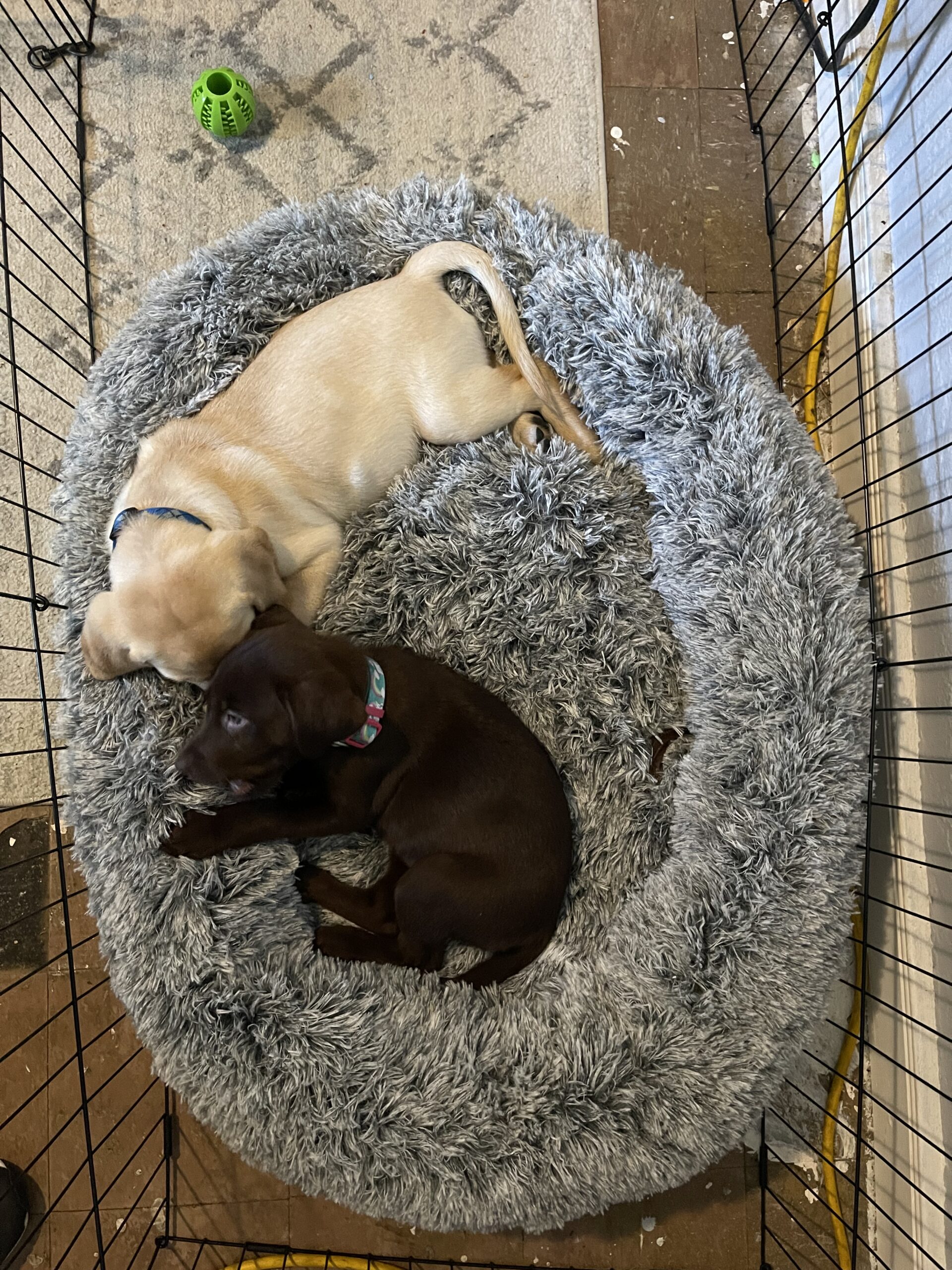
We have child gates throughout the house, so the dogs are always in our sight. That single habit prevents more trouble than any gadget, because most accidents happen the moment a dog is alone in a room it should not be in. Each dog has its own crate, a safe spot of its own to settle in. Outside, we have three separate fenced areas so dogs can play safely without piling on top of each other. Every one of our plants is dog-safe, no oleander, nothing that lands a dog at the vet. And there is fresh water available at all times, inside and out, which matters more than people think in the Florida heat.
None of that is expensive. It is just deliberate.
Inside the House
Walk your home at a dog's eye level and you will see the hazards. Start in the kitchen, the most dangerous room. Secure the trash, keep food off the counters, and latch the cabinets that hold medications and cleaning products. Human medication is the single most common pet poison there is, and a Lab will happily crunch a pill bottle.
Then there are the close calls you do not plan for. One of ours happened fast. Our grandbabies were eating grapes, and one hit the floor. A puppy snatched it up in a half-second. I got it out of her mouth before she swallowed or bit down. Grapes can cause kidney failure in dogs, and a puppy that quick is exactly why "always in our sight" is rule number one in our house.
Beyond the kitchen, manage the cords, pick up the small objects and kids' toys, and give every dog a crate or settled spot of its own. Slippery floors can hurt growing joints, so rugs and runners help, and a gate at the stairs keeps a clumsy puppy off them.
The Yard
Outside, fencing comes first. A secure fence, or separate fenced areas like we use, keeps a Lab safe while it burns off energy. Provide shade for the Florida sun and keep water out there at all times.
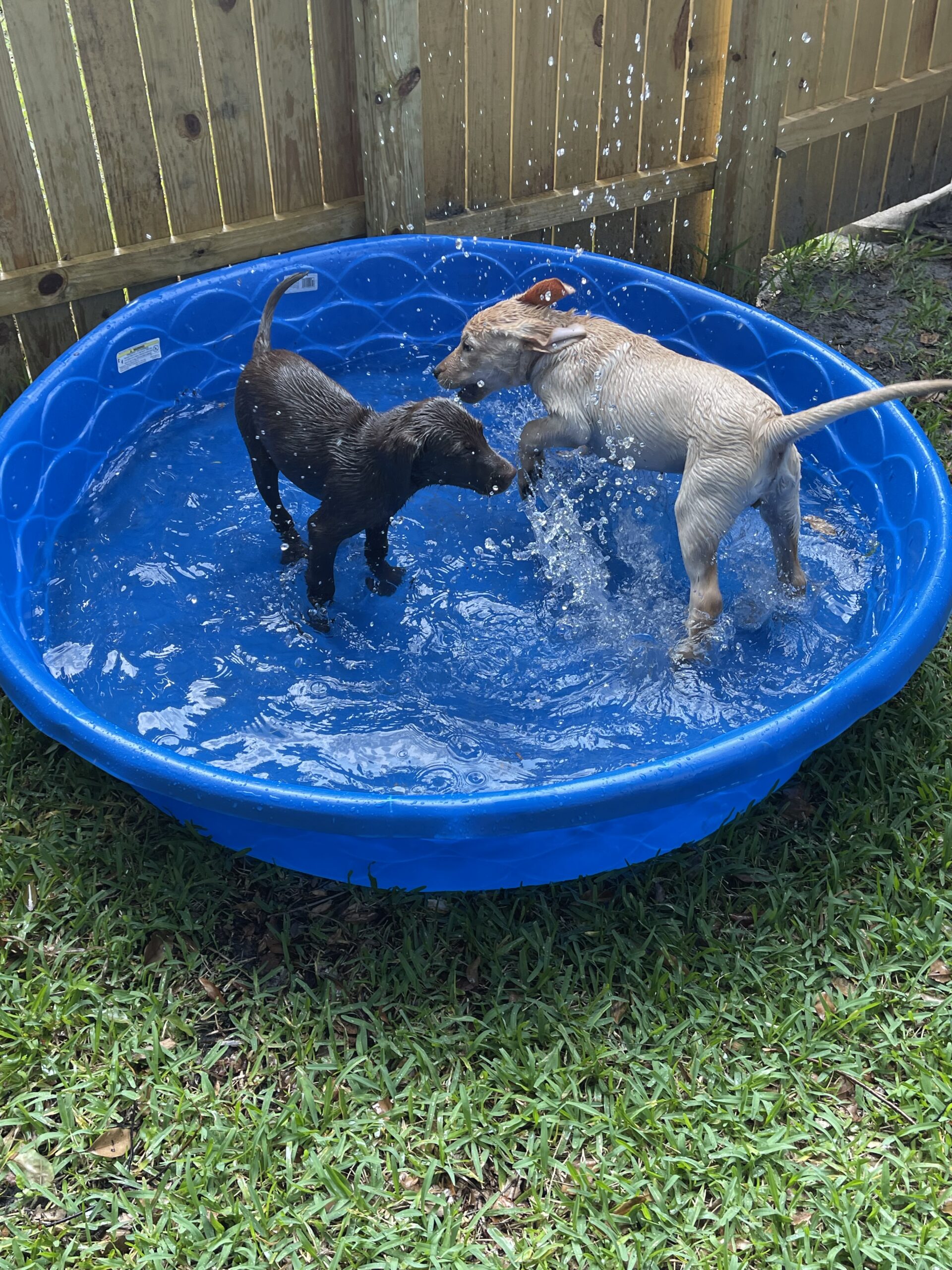
If you have a pool, treat it the way you would with a child. A Lab usually loves the water, but a puppy or an older dog needs to know how to find the steps and get out. Never assume. Supervise until you are certain.
And mind the plants, which leads to the part most national guides skip.
Florida Hazards Most Guides Ignore
Living in Florida means a hazard list the rest of the country does not deal with. Know these.
The big one is the sago palm, along with its relatives the coontie and cardboard palm. They are everywhere in Florida landscaping, and they are deadly. The ASPCA reports that up to half of sago palm ingestions are fatal, with the whole plant toxic and the seeds the worst. If you have one where your dog can reach it, take it out. Oleander is another common Florida plant that is highly toxic, which is why we do not keep it.
of sago palm ingestions are fatal, and the plant is common in Florida yards. The whole plant is toxic, with the seeds the most dangerous part. Source: ASPCA Animal Poison Control
Then the living hazards. Cane toads are toxic when a dog mouths them and can kill quickly. Fire ant mounds will swarm a curious nose. Snakes turn up in yards and brush. And in Florida, fleas and ticks are a year-round problem, not a summer one. Add the heat itself: Labs overheat fast, so shade and water are not optional here.
Toxic to Your Lab: A Quick Reference
Print this, or just keep it in mind. Keep all of it out of reach.
Inside the House
Dangerous Foods
- Chocolate
- Grapes and raisins
- Xylitol (sugar-free gum and candy)
- Onions, garlic, and chives
- Macadamia nuts
- Alcohol and caffeine
Household
- Human medications
- Cleaning products
- Rodent and ant bait
- Loose small objects and socks
Outside in the Yard
Toxic Plants
- Sago, coontie, cardboard palm (Florida)
- Oleander
- Azalea and rhododendron
- Lilies
- Hydrangea
- Tulip and other bulbs
Yard Hazards
- Fertilizer, pesticide, weed killer
- Snail and rodent bait
- Cane toads and fire ant mounds
- Standing water
Room-by-Room Safety Checklist
- Kitchen. Trash secured, counters clear, medications and cleaners latched away.
- Living areas. Cords managed, small objects and kids' toys off the floor.
- Whole house. Gates up so the dog is always in sight, a crate or safe spot per dog.
- Yard. Fencing checked, every plant dog-safe, shade available, no standing water.
- Pool. Supervised, and your dog knows where the steps are.
- Always. Fresh water inside and out, and eyes on the puppy.
What You Cannot Proof Away
Here is the truth no checklist captures. You cannot gadget your way to a safe dog. The two things that actually save dogs are supervision and a reliable "leave it" or "drop it." Our grape story ended well because someone was watching and acted in a second, not because the room was perfect. Build those habits, teach those cues early in our guide on Labrador puppy training, and understand why your Lab grabs everything in the first place in our guide to Labrador behavior.
Getting Ready for a Borosky Puppy?
A safe home is the first step. We will help with the rest.
References
- ASPCA Animal Poison Control. "The Dangers of the Sago Palm" and toxic plant list. aspca.org
- Fetch Pet Insurance / Figo Pet Insurance. Labrador claim frequency and foreign-body surgery costs.
- Trupanion. Foreign-body ingestion frequency by age. petinsurancequotes.com